
Case studyPartner integration
DP ×Stockpress
Connecting creative production and digital asset management through a scalable two-way integration.
I led the product strategy, partner alignment, workflow definition, validation, and launch planning for an integration that reduced manual post-approval handling by 70% during beta.
less manual asset handling during beta
approved assets out; reusable assets back in
entered the DAM workflow without building a DAM
Don’t build the system. Connect to it.
Design Pickle owned creative production through approval. Customers still had to move finished work into separate systems before it could be organized, governed, distributed, or reused.
Extend platform value
Connect the creative lifecycle beyond final delivery without pulling focus from Design Pickle’s core production strengths.
Reduce operational drag
Remove the repetitive download, rename, upload, and organization work attached to every approved asset.
Create a two-way lifecycle
Move approved work into asset management and bring existing assets back into new creative requests.
Strategic decisionPartnering closed a meaningful workflow gap faster while creating a reusable foundation for future ecosystem integrations.
Post-approval value was getting stuck
Approval looked like the end of the platform workflow, but it was only the beginning of the customer’s operational work.
No structured home for approved assets
Final files lived across local downloads, drives, email threads, and inconsistent folder systems.
No easy path to refresh existing content
Customers had to locate, re-upload, and re-brief old creative before a new version could begin.
Workflow evidence made the cost visible
I connected observed customer behavior, volume assumptions, market signals, and willingness-to-pay research to quantify both the user problem and the strategic opportunity.
per approved asset
Administrative work spent downloading, renaming, uploading, and reorganizing final files.
deliverables each month
Typical volume managed by high-output customer teams, compounding small inefficiencies.
less manual handling
Administrative effort eliminated through the connected beta workflow.
A platform-only value path was emerging
Demand for software features independent of creative services created an opportunity to expand platform value. The DAM category offered a credible path without the cost and complexity of building asset management internally.
Partnering beat rebuilding the category
The decision was not simply which feature to ship. It was how to expand the platform while protecting focus, speed, and investment in the core creative experience.
One connection. A continuous creative lifecycle.
We defined a secure native integration using API and integration-key authentication, with shared rules for asset metadata, collections, status, permissions, and failure handling.
Design Pickle
- Request context
- Creative versions
- Approval state
Stockpress
- Collections
- Metadata + access
- Approved library
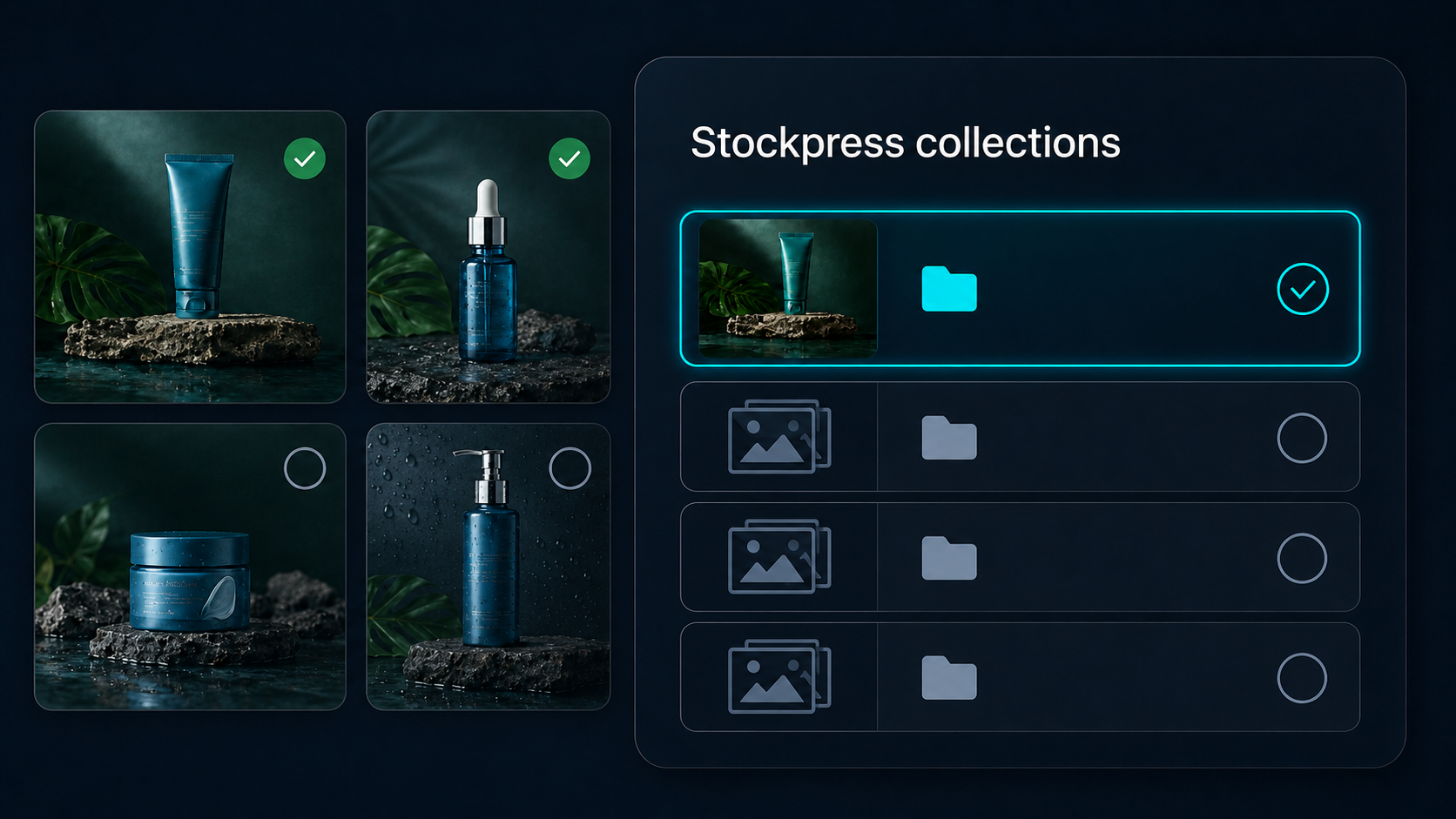
Approved assets move directly into organized collections
Users preserve the approval decision, asset context, and destination structure without creating another manual handoff.
Approve asset
Final work is marked approved in Design Pickle.
Select export
Users choose the correct Stockpress collection.
Access in Stockpress
The asset arrives with organization and context intact.
Existing assets become the start of new creative work
Approved assets return as structured context for refreshes, extensions, variants, and new requests—without searching, downloading, or re-uploading.
Select asset
Choose an approved file from a Stockpress collection.
Select request path
Choose how the approved work should be reused.
Create request
Start with approved context already attached.
Validation focused on workflow value—not connection alone
The beta evaluated whether the integration removed operational work, preserved trust across systems, and created a foundation customers would use repeatedly.
Setup success
Could teams authenticate and map their working destinations without support-heavy configuration?
Transfer trust
Did assets, metadata, approvals, and destination structure arrive accurately and predictably?
Lifecycle reuse
Would customers bring existing assets back into new creative requests rather than recreating context?
Operational impact
How much post-approval handling did the connected workflow remove for active beta teams?
Aligned two products around one customer outcome
The work required coordinated decisions across product strategy, partner operations, technical constraints, customer experience, commercial structure, launch readiness, and measurement.
Framed the opportunity
Connected customer friction, market growth, platform strategy, and revenue potential into a clear investment case.
Defined shared scope
Aligned both organizations on authentication, workflow boundaries, metadata behavior, failure states, and launch criteria.
Protected experience quality
Translated two products with different models into a coherent lifecycle that felt native on both sides.
Built for the next partner
Structured requirements and integration patterns so future ecosystem connections would not begin from zero.
Extended the platform without owning asset management
The integration connected creation, approval, organization, distribution, and reuse—while keeping each partner focused on its strongest product capabilities.
Reduced manual handling
Approved assets moved directly into organized collections instead of requiring repetitive handoff work.
Increased asset reuse
Existing creative became the starting point for refreshes, extensions, variants, and new requests.
Introduced a revenue stream
A revenue-share model monetized customer usage without the cost of building a DAM product internally.
reduction in manual post-approval asset handling