
DP1 Platform Strategy
Turning customer churn into a platform-first product strategy.
I translated churn analysis, customer research, workflow evidence, and pricing signals into platform priorities and a validated case for standalone SaaS value.
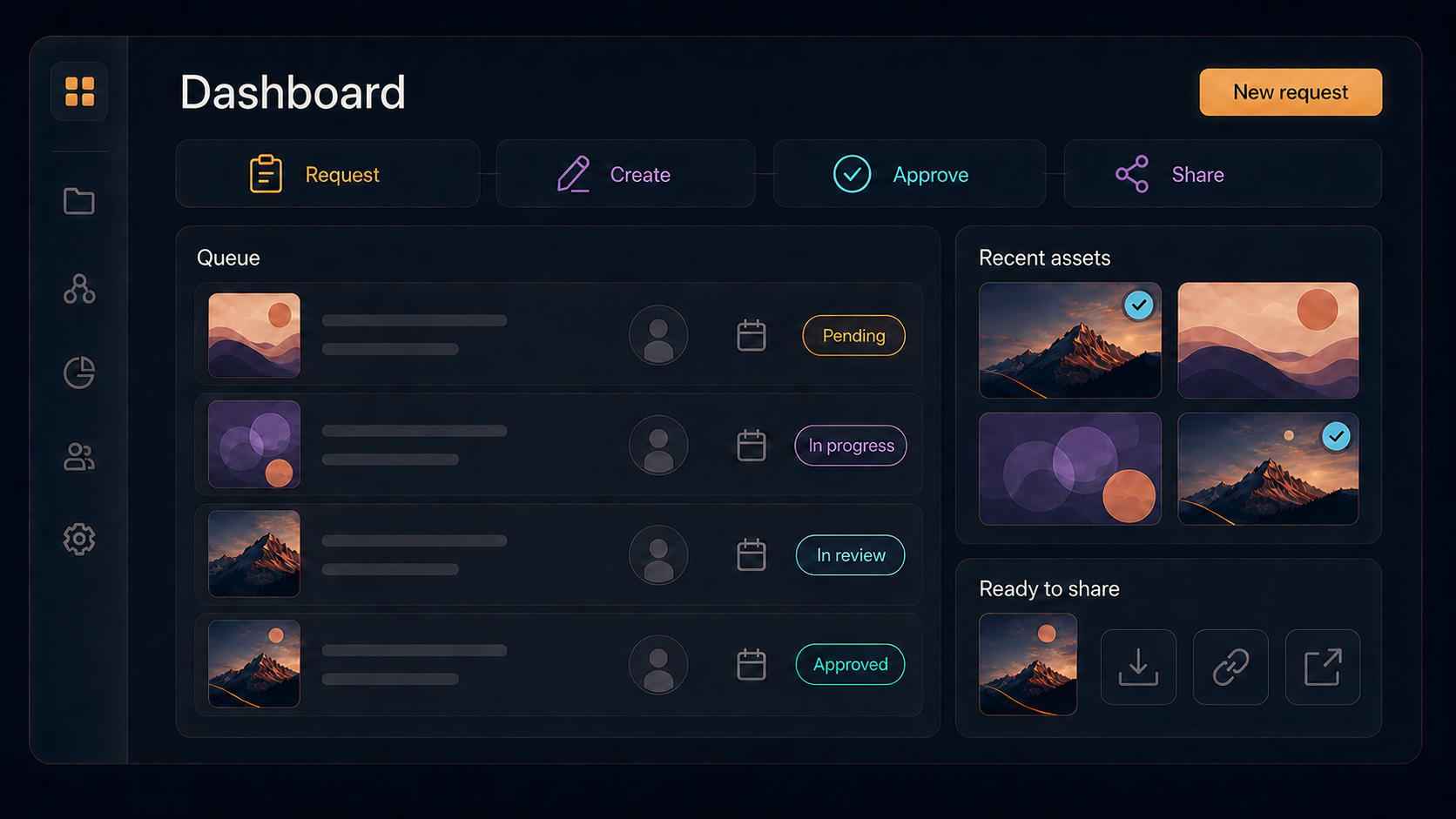
Platform value could stand on its own
Customers were willing to pay for platform capabilities independently—if the product solved enough of the workflow beyond creative services.
The challenge
Customer churn exposed workflow, collaboration, and asset-management gaps that creative output alone could not offset.
My approach
I centered cancelled and paused customers, separated buyer and operator needs, and tested platform value and willingness to pay.
The result
Research established a customer-backed platform thesis and focused roadmap priorities across proofing, DAM, integrations, and workflow.
Product thesisCreative services deliver the output. A connected platform can own the workflow.
Ground platform evolution in customer behavior
Design Pickle was exploring how the product could evolve beyond bundled creative services. The work needed to identify churn drivers, expose workflow gaps, and determine whether standalone platform value was real.
Understand churn
Identify why customers paused or cancelled and where the experience failed to support durable value.
Find workflow gaps
Surface the product, collaboration, and asset-management friction embedded in everyday work.
Validate platform value
Test customer demand to inform roadmap, packaging, positioning, and monetization decisions.
Start with customers who had already left
Structured interviews and surveys focused on customers who cancelled or went on hold within the previous 12 months, reducing current-state bias and grounding strategy in demonstrated friction.
67% Buyers, budget owners, and decision makers
33% End users and daily operators
Churn signals Why customers paused or cancelled
Workflow behavior How work moved across tools and teams
Value testing What customers would adopt and pay for
Creative output was strong. The surrounding workflow was not.
Customers consistently connected dissatisfaction and churn to quality continuity, turnaround friction, and cost pressure—revealing that platform experience was part of the value equation.
From a service portal to a standalone product
The original platform primarily supported the bundled creative service. Customers still assembled the rest of their workflow across external tools. The implemented strategy added enough independent workflow value for the platform to be launched and sold on its own.
Platform usage did not equal platform value
Customers used the product to access creative output, but modern workflow expectations extended beyond request submission and delivery.
Asset tracking
Cited workflow organization and asset tracking as a top unmet need.
Proofing & approvals
Identified client-facing review workflows as critical to increased value.
Integrations
Wanted tighter connections to Slack, PM tools, and digital asset systems.
Standalone value was visible—and conditional
Customers saw an independent product opportunity when the platform solved meaningful workflow and collaboration gaps.
Workflow ownership Coordinate projects from request through delivery
Connected collaboration Keep feedback, approvals, and context together
Reusable asset value Organize, find, and activate completed creative
Platform improvements could support monetization
Willingness-to-pay testing showed that the opportunity extended beyond retention. Customers assigned direct value to a focused platform product without bundled creative services.
Median willingness to pay for platform value supporting up to four users.
Launched without bundled creative services after the platform value proposition expanded.
Centralized asset management and project tracking
Proofing and approval workflows
White-labeling for agency teams
Integrations with existing systems
Turn evidence into a platform roadmap
The research reframed platform investment from an interface refresh into a connected product strategy tied to retention, expansion, and standalone revenue.
Own the workflow
Strengthen project tracking, visibility, and request-to-delivery continuity.
Retention foundationConnect collaboration
Improve proofing, approvals, client participation, and shared context.
Adoption & expansionActivate assets
Create a centralized system for organizing, finding, and reusing creative.
Platform utilityExtend the ecosystem
Connect the platform with the tools customers already use to run work.
Standalone valueFour V1 product releases within 12 months
The research did not remain a strategy artifact. Its highest-value opportunity areas became an executed platform portfolio spanning proofing, asset mobility, collaboration integrations, and asset management.
Markup Rebuilt
Improved in-platform markup tools made feedback more precise and kept review context connected to the creative.
Proofing & approvalsStockpress integration APIs
Integration APIs created a path for approved assets to move into a dedicated asset destination instead of ending at download.
Asset mobilitySlack & Teams integrations
Collaboration integrations extended platform activity into the communication environments customers already used.
Connected ecosystemAsset management
A new platform area made assets accessible beyond individual requests, creating visibility across creative work.
New platform capabilityFrom customer evidence to portfolio execution
The work connected discovery, customer segmentation, value testing, prioritization, stakeholder alignment, and coordinated delivery across four platform workstreams.
Centered churned customers
Designed research around demonstrated friction, balancing economic buyers with daily operators.
Separated symptoms from systems
Connected churn signals to the platform gaps producing repeated operational friction.
Tested demand and pricing
Measured standalone interest and willingness to pay before recommending investment.
Moved strategy into delivery
Translated customer evidence into coordinated V1 releases across proofing, integrations, and asset management.
Customer data shaped—and shipped—a platform-first direction
DP1 turned customer friction into focused roadmap priorities and four executed V1 releases, demonstrating that the research directly changed what the organization built.
Roadmap execution
Converted research priorities into four V1 releases within a 12-month delivery window.
Commercial rollout
Converted validated demand into a platform-only offering launched at $119 per month.
Product-led strategy
Supported a shift toward platform-first value alongside the existing service model.
Grounded in customer data, DP1 established the case for platform-first value—and created the direction used to deliver new proofing, integration, collaboration, and asset-management capabilities.